Reading the Pro Signals V5 Chart Dashboard, Row by Row
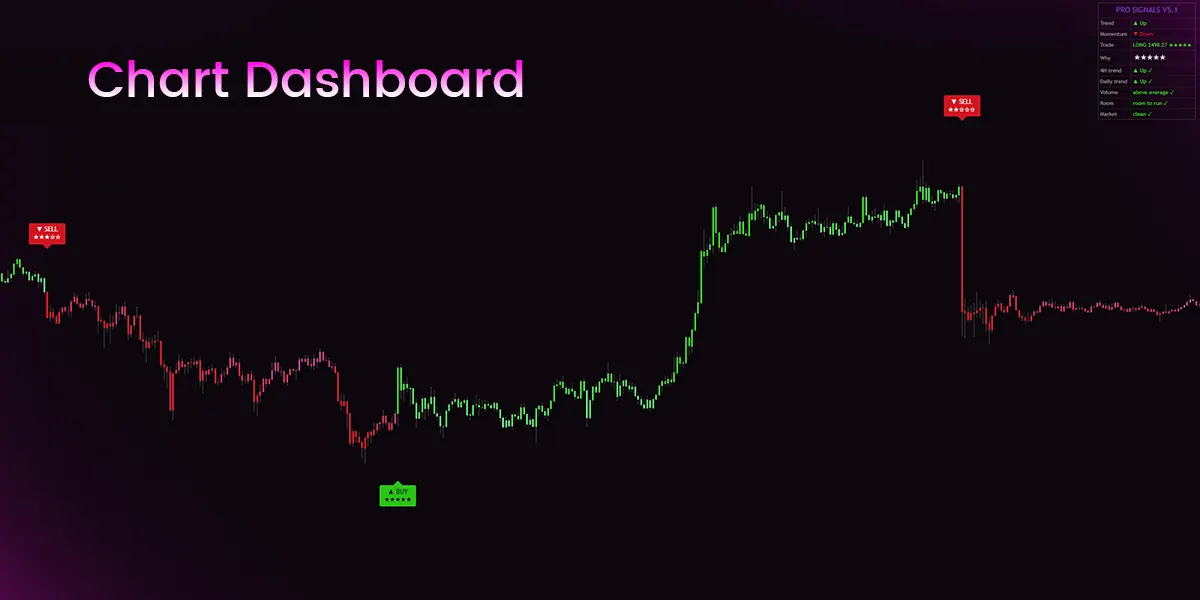
Trend, momentum, the open trade, its stars and the five checks: what every row of the Pro Signals V5 Chart Dashboard tells you.
Reading the Pro Signals V5 Chart Dashboard, Row by Row
The Chart Dashboard answers one question fast: how much lines up right now? Here's every row.
The top rows
The five checks
Live checks vs. signal stars
The check rows update every candle. The stars on a signal label were locked in on the signal candle. Both are useful: the label tells you what the setup looked like, the dashboard tells you what it looks like now.
Reversal Bands and the Room row
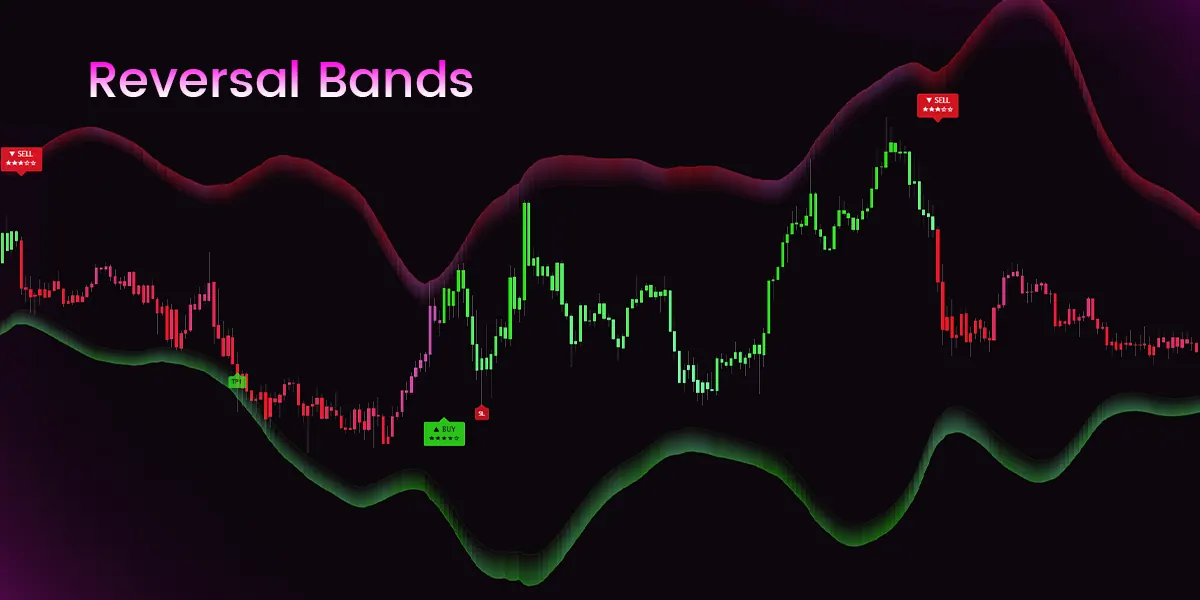
The Room check uses the Reversal Bands. When price is already inside the outer band, the move is stretched and the check fails.
Full details: Chart Dashboard in the docs.
SimpleAlgo provides educational tools and chart analysis. Nothing here is financial advice. Trading involves substantial risk of loss, and past performance does not guarantee future results.

Written by
Nikolas MetreveliFounder of SimpleAlgo
Nikolas wrote his first real code at 12 and freelanced software tools and websites for small businesses before finding the markets at 15. He builds and maintains every SimpleAlgo indicator and writes these guides from hands-on use of the tools.
More about Nikolas and SimpleAlgoRelated Articles
How the Pro Signals V5 5-Star Signal Rating Works
Five checks, one star each. What every star in Pro Signals V5 means, which higher timeframes it reads, and how to actually use the rating.
Pro Signals V5 Update: Star-Rated Signals, the Why, and a Built-In Trade Plan
The biggest update to Pro Signals V5 yet. Every signal now comes with a 5-star rating, the reasons behind it, and a stop with three targets. Here's everything that changed.

How to Use Multiple Timeframes on TradingView
Set up a top-down workflow with multi-chart layouts, synced symbols and higher-timeframe data on one chart — without ending up with six contradicting opinions.
Related tools and guides
Next steps on this topic from the rest of the SimpleAlgo library.